
Edition of Literary Cuneiform Texts from Assur
Duration: 2004 to 2022
On the ruin-covered hill of the city of Assur—the former capital of the Assyrian Empire, located in present-day Iraq—German archaeologists unearthed several thousand clay tablets and fragments inscribed with cuneiform texts at the beginning of the 20th century. Most of these artifacts of ancient Near Eastern written culture are now housed in the Museum of the Ancient Near East in Berlin. In addition to documents used for correspondence and record-keeping in administrative and business contexts, this extensive collection also includes texts whose contents—often spanning centuries and vast distances—have been preserved in writing.
These so-called literary cuneiform texts from Assur contain legal regulations and decrees, historical and mythical accounts, fables, and words of wisdom; regulations for festival rituals and other religious ceremonies are also found among them, as are poems, songs, prayers, and—among many other things—writings in which specialized knowledge from the disciplines of ancient Near Eastern scholarship is recorded.
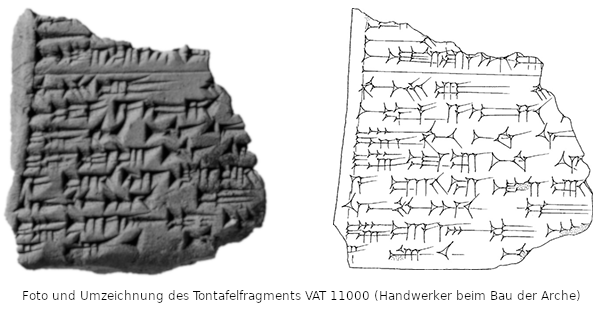
Since they were last “in use” in Assur, many of these literary texts are now being re-examined for the first time as part of the “Edition of Literary Cuneiform Texts from Assur” research project of the Heidelberg Academy of Sciences and Humanities.
The research project is engaged in systematically cataloging the corpus of literary texts from Assur and publishing the documents—which have not yet been published or have been published only inadequately—in monographs according to the highest philological standards of textual editing. These form the monograph series “Literary Cuneiform Texts from Assur” (KAL). The goal is to use this comprehensive edition of this rich body of texts to make written records—which are of great significance for further research in the field of Ancient Near Eastern Studies— and thereby to help open up new insights into the intellectual worlds of a cultural sphere that has exhibited enormous political and cultural dynamism for millennia.
Research project portal on the University of Heidelberg website