
Measuring and Understanding the World Through Science

6. Subprogram (2014 through May 2019)

All sciences share the common goal of seeking to understand the world. However, the methodological approaches chosen to achieve this goal vary greatly. This is evident in the differing importance attached to quantification and empirical evidence across the various branches of science. What is the potential and where are the limits of an approach oriented toward numbers and measurements, or, conversely, of an approach that adopts a non-quantifiable perspective? How do these methodological approaches influence the models and representations that the sciences construct of the world?

The projects of the 6th subprogram focus their research on these various aspects of measuring and assessing the world.

Sponsored by

Image removed.

Quantification in Politics and Law: The Case of Economic Sanctions

The project “Quantification and Operationalization of the Proportionality of International and Interlocal Sanctions” aims to further develop the principle of proportionality so that it can be applied to the assessment of international and interlocal sanctions. Against the backdrop of international law—and in particular, fundamental and human rights standards—the project seeks to address the issue of sanctions through legal means. Quantifying the effects of international sanctions using available data is intended to contribute to streamlining the proportionality review and the imposition of sanctions overall.

Publications resulting from the project:
  • Valta, Matthias (2019): Country-Specific Economic Sanctions Between Sovereignty and the Protection of Human Rights. Tübingen: Mohr Siebeck. (=lus Publicum Vol. 283)
  • Valta, Matthias (2017): Quantification and Operationalization of the Proportionality of International Economic Sanctions. In: Schweiker, Marcel/Hass, Joachim/Novokhatko, Anna/Halbleib, Roxana (eds.): Measuring and Understanding the World Through Science, pp. 97–116.

Associate

Prof. Dr. Matthias Valta

The Monetization of Politics in the 12th and 13th Centuries

The research project “Money, Favor, and Grace” examined the effects of the monetization of Europe during the High Middle Ages on the political order by combining perspectives from the humanities and the social sciences. The increasing availability and prevalence of money led to royal favor and grace—as well as the goodwill of subordinates—being increasingly measured and negotiated in monetary terms. The payments made in various contexts (fines, compensation, settlements, alliances, bribes, etc.) reveal a tariff system within the political order, which underwent a profound transformation during this period.

Publications resulting from the project:
  • Büttner, Andreas (2018): Nervus rerum and the Root of All Evil. The Role of Money in Papal Relations with Frederick II. In: The Roman Curia and Money. From the Mid-12th Century to the Early 14th Century, ed. by Werner Maleczek, Ostfildern. (=Lectures and Research/Constance Working Group for Medieval History, Vol. 85)
  • Büttner, Andreas/Mauntel, Christoph (2017): Does Clio Count, Too?—Measuring and Understanding in Historical Scholarship. In: Schweiker, M./Hass, J./Novokhatko, A./Halbleib, R. (2017): Measurement and Understanding in Science. Interdisciplinary Approaches. Wiesbaden, pp. 43–55.

Faculty Member:

PD Dr. Andreas Büttner

European Data Protection and Data Exchange in Genetic Research: Interdisciplinary Conditions and International Implications

The research project addressed the challenges of data exchange and data protection in transnational genetic research to explore how data processing in this sector can be regulated. Particular attention was paid to self-regulatory measures and their anchoring in data protection law. The topic was addressed through collaboration between the fields of biotechnology and law.

Publications resulting from the project:
  • F. Molnár-Gábor, J. O. Korbel (2020). Genomic Data Sharing in Europe is Stumbling – Could a Code of Conduct Prevent its Fall? In: EMBO Molecular Medicine 12: e11421.
  • M. Philips, F. Molnár-Gábor, J. O. Korbel, A. Thorogood, Y. Joly, D. Chalmers, D. Townend, B. M. Knoppers (2020). The PCAWG Consortium. Of Clouds and Genomic Data Protection. In: Nature 578: 31–33, doi: 10.1038/d41586-020-00082-9.F.
  • S. Yakneen, S.M. Waszak (2020). PCAWG Technical Working Group, M. Gertz, J.O. Korbel, PCA-WG Consortium. Butler enables rapid cloud-based analysis of thousands of human genomes. In: Nat. Biotechnol. 38: 288−292, doi: 10.1038/s41587-019-0360-3.
  • F. Molnár-Gábor (2019). Processing of patient data in the cloud under the provisions of the GDPR, with special consideration of transnational (research) aspects. In: I. Spiecker gen. Döhmann, A. Wallrabenstein (eds.) Healthcare in the Age of the GDPR, Peter Lang: 121–141.
  • F. Molnár-Gábor (2019). The Right to Remain Unaware—Issues of Legalization in the Context of Big Data in Modern Biomedicine. In: G. Duttge, Ch. Lenk (eds.), The So-Called Right to Remain Unaware: Normative Foundation and Practical Applicability, Mentis: 83–117.
  • M. Prictor, M. A. Lewis, A. J. Newson, M. Haas, S. Baba, H. Kim, M. Kokado, J. Minari, F. Molnár-Gábor, B. Yamamoto, J. Kaye, H. J. A. Teare (2019). Dynamic Consent: An Evaluation and Reporting Framework. In: Journal of Empirical Research on Human Research Ethics 14(5): 1–12.
  • M. Thu Nguyen, J. Goldblatt, R. Isasi, M. Jagut, A. Hechtelt Jonker, P. Kaufmann, L. Ouil-lade, F. Molnár-Gábor, M. Shabani, E. Sid, A. M. Tassé, D. Wong-Rieger, B. M. Knoppers (2019).On behalf of the IRDiRC-GA4GH Model Consent Clauses Task Force. Model consent clauses for rare diseases research. In: BMC Medical Ethics 20: 55.
  • B. M. Knoppers, F. Molnár-Gábor, M. Philips, J. O. Korbel, D. Townend (2018). Broaden the human rights focus on health data under the GDPR, *Nature* 558: 189.
  • F. Molnár-Gábor (2018). Germany: A Fair Balance Between Scientific Freedom and Data Subjects’ Rights? In: Human Genetics 137(8): 619–626.
  • F. Molnár-Gábor, L. Kaffenberger (2018). Privacy Shield—Significance of the EU Commission’s Adequacy Decision. Legal Protection in the Transatlantic Processing of Personal Data. In: Zeitschrift für Datenschutz 18(4): 162–168.
  • F. Molnár-Gábor (2018). The Regulation of Scientific Research in the GDPR. In: J. Täger/German Foundation for Legal Informatics (eds.) Legal Issues of Digital Transformations—Shaping Digital Change Processes through Law. Proceedings of the Fall Academy: 159–173.

Conferences, workshops, and seminars organized as part of the project:
  • Final conference of the WIN Kolleg project target="_blank">“Data Sharing in Transnational Cancer Genome Oncology: Practical and Ethico-Legal Issues” May 27, 2019 (Glasgow).
  • Conference “Law 4.0 – Innovations from the Legal Labs” 2017 Heidelberg, in collaboration with the German Foundation for Law and Informatics).
  • Seminar “Data Processing in Biomedicine: Technical, Normative, and Societal Challenges” (Summer Semester 2019/Summer Semester 2018, core competency course, Faculty of Law at the Ruprecht Karls University of Heidelberg, 2 SWS)
  • Course participants:
    • Dr. Fruzsina Molnár-Gábor
    • Dr. Jan O. Korbel

    Measuring Texts – Interpreting Measurements. Classical Studies and the Digital Humanities as a Promising Symbiosis

    The project aims to identify the opportunities offered by the Digital Humanities for text analysis within the field of Classical Studies, to reflect on the impact of quantitative analysis on established methods, and to achieve a necessary reorientation of our own methods through interdisciplinary exchange with modern philology and history.

    Further information on the WIN project of the Heidelberg Academy of Sciences and Humanities is available at: https://www.texte-messen.uni-freiburg.de

    Fellows:

    Interdisciplinary Research and Experimentation Platform for the Empirical Analysis of Legal Terminology

    The project focused on the interdisciplinary development and pilot testing of a freely accessible research and experimentation platform (CAL2Lab) for data-driven, legal-linguistic analysis of legal language and conceptual systems. Based on the reference corpus of German-language law (JuReko), the platform provides semi-automated tools to prestructure the analysis of legal terminology formation across several relevant dimensions. The focus is on the contextual specificity or vagueness of legal expressions, both diachronically (conceptual change over time) and synchronically (a cross-section of legal schools, media, text types, areas of law, etc.). The platform was developed and tested in collaboration with representatives from the fields of legal philosophy, sociology, and legal linguistics, as well as officials involved in legislative practice (BMJV).

    Further information on the WIN project of the Heidelberg Academy of Sciences and Humanities and on the conference can be found at: https://cal2.eu/index.php

    Publications resulting from the project:
    • Gauer, Isabelle, Hanjo Hamann & Friedemann Vogel: The Legal Reference Corpus (JuReko). In: Burr (ed.): DHd 2016: Modeling – Networking – Visualization. Leipzig: nisaba, 2nd ed. 2017, pp. 156–158. Available online at www.dhd2016.de/boa-2.0.pdf.
    • Hamann, Hanjo & Friedemann Vogel (eds.): The Fabric of Language and Law. Special Issue of the International Journal of Language & Law (JLL), 2017. 109 pages, available online at https://www.languageandlaw.eu/jll/article/view/361.
    • Hamann, Hanjo & Friedemann Vogel: The Fabric of Language and Law. Towards an International Research Network for Computer-Assisted Legal Linguistics (CAL²), in: Hamann/Vogel (previous entry), pp. 101–109.
    • Hamann, Hanjo & Friedemann Vogel: Critical Mass—Aspects of a Quantitatively Oriented Hermeneutics Using the Example of Computer-Assisted Legal Linguistics. In: Schweiker/Hass/Novokhatko/Halbleib (eds.): Measuring and Understanding in Science. Interdisciplinary Approaches. Wiesbaden: Metzler, 2017, pp. 81–96.
    • Hamann, Hanjo & Friedemann Vogel: Evidence-Based Jurisprudence Meets Legal Linguistics—Unlikely Blends Made in Germany, BYU L. Rev., Vol. 43 (2018), pp. 1473–1501.
    • Hamann, Hanjo & Friedemann Vogel (2019): Seven Years of Language & Law. Editors’ Progress Report on the Journal of the International Language & Law Association, International Journal of Language & Law 8 (2019), pp. 1–8.
    • Vogel, Friedemann, “Calculating Legal Meanings? Drawbacks and Opportunities of Corpus-Assisted Legal Linguistics to Make the Law (More) Explicit.” In: Stein/Giltrow (eds.): The Pragmatic Turn in Law. New York/Boston: Mouton, 2016, pp. 287–306.
    • Vogel, Friedemann, Benjamin Bäumer, Fabian Deus, Jan Oliver Rüdiger & Felix Tripps: The Meaning of the Adjective “Geschäftsmäßig” in Legal Jargon and Everyday Language in the Mass Media. A Legal-Linguistic Corpus Study as an Example of Computer-Assisted Meaning Analysis in Law, in: LeGes 30 (2019) 3.
    • Vogel, Friedemann, Isabelle Gauer & Hanjo Hamann: Understanding Legal Semantics Through Measurement. CAL2Lab—A Computer-Assisted Research and Experimentation Platform as a Contribution to Data-Driven Legal Linguistics. In: Vogel (ed.): Law Is Not a Text: Studies on Speechlessness in the Constitutional State. Berlin: Duncker & Humblot, 2017, pp. 177–184.
    • Vogel, Friedemann, Hanjo Hamann & Isabelle Gauer: Computer-Assisted Legal Linguistics: Corpus Analysis as a New Tool for Legal Studies, *Law & Social Inquiry*, Vol. 43 (2018), pp. 1340–1363. DOI: 10.1111/lsi.12305.

    Conferences, workshops, and seminars organized as part of the project:

    Conference The Fabric of Language and Law. Discovering Patterns through Legal Corpus Linguistics target="_blank"> March 18–19, 2016, Heidelberg.

    Fellows:
    • Dr. Dr. Hanjo Hamann
    • Prof. Dr. Friedemann Vogel
    Religious Interpretation and Empirical Quantification in Medieval Europe

    As part of the WIN project “The Measurement of the World,” the aim was to investigate the role that measuring and counting played as descriptive methods and explanatory models in the mapping of the world in medieval Europe. The project was developed in close connection with the applicant’s planned habilitation project. Initial results have been published, and a comprehensive database has been created and is being continuously expanded. In terms of content, it has become apparent that the topic of quantitative measurement encompasses significantly more areas of medieval life than just geography. While a comprehensive study would be desirable, the project’s approach necessitates a thematically limited analysis.

    God as Creator measures the Earth with a compass.
    Old Testament Bible, 1477, Heidelberg, University Library, Cod. Pal. germ. 16, fol. 9v.

    Publications resulting from the project:
    • Büttner, Andreas, Mauntel, Christoph (2017): Does Clio Count, Too? – Measurement and Understanding in Historical Scholarship. In: Schweiker, M., Hass, J., Novokhatko, A., Halbleib, R.: Measurement and Understanding in Science. Interdisciplinary Approaches. Wiesbaden, pp. 43–55.
    • Mauntel, Christoph/Oesterle, Jenny (2017): Water Worlds. Oceans and Seas in Medieval Christian and Arabic Cosmography. In: Gerlinde Huber-Rebenich/Christian Rohr/Michael Stolz (eds.): Water in Medieval Culture. Uses, Perceptions, and Symbolism. Berlin/Boston, pp. 59–77. (The Middle Ages, Supplements 4)
    • Mauntel, Christoph (2017): Encompassed by the Ocean. Bodies of Water as a Constitutive Element of Medieval World Orders, In: Friedrich Edelmayer et al. (eds.): Borders, Interactions, Conflicts, Interdisciplinary Approaches. Berlin/Boston, pp. 57–74. (Studies on the History and Culture of the Iberian and Ibero-American Countries)
    • Mauntel, Christoph (2016): The Surveying of the World. Religious Interpretation and Empirical Quantification in Medieval Europe. In: Annual of the Heidelberg Academy of Sciences and Humanities 2015. Heidelberg, pp. 291–294/302–306

    Fellow:

    Dr. Christoph Mauntel

    Science and Contemporary Politics

    The WIN Kolleg research project “Knowledge (Science), Numbers, and Power,” which concluded in May 2017, examined the relationship between science and politics in general, and the role of numbers in the political arena in particular. The follow-up project “Working Numbers”: Science and Contemporary Politics sought to build directly on the scientific research findings obtained through interdisciplinary work, to further develop them, and to make them accessible to political decision-makers through a deliberately practice-oriented approach. As a result, the project succeeded in generating concrete recommendations for (European) political practice, discussing them with relevant political actors at an international event held at the European Parliament in Brussels, and thereby ensuring the sustainability of the academic research findings published in book form.

    Publication resulting from the project:

    Prutsch, J. (Ed.): Science, Numbers and Politics. Basingstoke [etc.]: Palgrave Macmillan, 2019. See https://www.palgrave.com/gp/book/9783030112073

    Conferences, workshops, and seminars organized as part of the project:

    Faculty Member:

    PD MMag. Dr. Markus J. Prutsch, M.Res.

    Reflections on Methodology and Its Implications

    In this project, two aspects of daily life —pain and comfort—were examined from an interdisciplinary perspective by combining psychological pain research with building physics-based comfort research, with a focus on parallels and discrepancies in their perception and their dynamic changes (adaptation and alliesthesia). In the first part of the project, a methodology consisting of qualitative and quantitative elements was successfully developed, enabling these processes to be better measured and understood. In the second part of the project, the focus was on understanding and explaining dynamic perceptual processes and the factors influencing them. The project yielded important findings, such as the realization that the indiscriminate use of scales to assess perception can lead to distortions—for which solutions were developed and validated—as well as the description of a new theoretical concept of seasonal alliesthesia.

    Publications resulting from the project:
    • Becker S., Fuchs X., Schakib-Ektaban K., Schweiker M. (2020). What does “moderate pain” mean? Subgroups with different conceptions of rating scales evaluate experimental pain differently. European Journal of Pain 24(39): 625–638. doi:10.1002/ejp.1514
    • Schweiker M., Schakib-Ekbatan K., Fuchs X., Becker S. (2020). A seasonal approach to alliesthesia. Is there a conflict with thermal adaptation? Energy and Buildings 212: 109745. doi:10.1016/j.enbuild.2019.109745
    • Schweiker M., André M., Al-Atrash F., Al-Khatri H., Alprianti R.R., Alsaad H., Amin R., Ampatzi E., Arsano A.Y., Montazami Azadehk, Azar E., Bahareh B., Batagarawa A., Becker S., et al. (2020). Evaluating assumptions of scales for subjective assessment of thermal environments – do laypersons perceive them the way we researchers believe? Energy and Buildings 211: 109761. doi:10.1016/j.enbuild.2020.109761
    • Schweiker M., Abdul-Zahra A., Afonso de André M., Al-Atrash F., Al-Khatri H., Risky Alprianti R., Alsaad H., Amin R., Ampatzi E., Arsano A.Y., Azadeh M., Azar E., Bahareh B., Batagarawa A., Becker S., et al. (2019). The Scales Project, a cross-national dataset on the interpretation of thermal comfort scales. Scientific Data, 6(289): 1–10. doi:10.6084/m9.figshare.9805289
    • Fuchs X., Becker S., Schakib-Ekbatan K., Schweiker M. (2018). Subgroups with different conceptions of scales rate room temperatures differently. Building and Environment 128: 236–247. doi:10.1016/j.buildenv.2017.11.034
    • Schakib-Ekbatan K., Becker S., Cannistraro A., Schweiker M. (2018). What do people associate with “cold” or “hot”? - Qualitative analyses of the ASHRAE scales’ labels. In: 10th Windsor Conference – Rethinking Comfort.
    • Schweiker M., Becker S., and Schakib-Ekbatan K. (2018). Thermal adaptation and seasonal alliesthesia: Two conflicting concepts? In: 10th Windsor Conference – Rethinking Comfort.
    • Becker S., Schweiker M. (2017). Reflections and Perspectives on the Research Fields of Thermal Comfort in the Workplace and Pain. In: M. Schweiker, J. Hass, A. Novokhatko, and R. Halbleib (eds.), Measuring and Understanding in Science. Springer: 187–206.
    • Fuchs X., Schweiker M., Becker S. (2017). Do “cool” or “painful” mean the same to different people? Subgroups holding different conceptions of scales also show different responses under experimental conditions. In: Program of the 59th Conference of Experimental Psychologists (TeaP 2017), Dresden.
    • Krause M.J., Becker S. (2017). Conclusion—Measuring and Understanding the World Through Science In: M. Schweiker, J. Hass, A. Novokhatko, and R. Halbleib (eds.), Measuring and Understanding in Science—Interdisciplinary Approaches. Springer: 27–286.
    • Schweiker M., Fuchs X., Becker S., Dovjak M., Shukuya M., Hawighorst M., Kolarik J. (2017). Challenging the Assumptions Related to the Use of Thermal Sensation Scales. Building Research & Information 45(5): 572–589. doi:10.1080/09613218.2016.1183185
    • Schweiker M., Hass J., Novokhatko A., Halbleib R. (eds.) (2017). Measuring and Understanding in Science. Springer: 187–206.

    Conferences, workshops, and seminars organized as part of the project:
    • Workshop “Scales Applied in Thermal Comfort Research”, (April 2015).
    • Workshop “Perception in Numbers” (June 3, 2015, Heidelberg).

    International Symposium "Perception of Thermal Comfort and Pain—Are We Assessing Their Dynamics Right?" (November 9–10, 2017, Heidelberg).

    Research Fellows:
    • Dr. Susanne Becker
    • Dr. Marcel Schweiker

    Analyzing, Measuring, and Forecasting Financial Risks Using High-Frequency Data

    The project aims to improve the predictability of financial risks (A) by developing new methods for measuring and forecasting these risks using high-frequency data, and (B) by developing new methods for evaluating these risk forecasts, especially during times of crisis when these forecasts are most urgently needed. The research for this project is particularly relevant in the context of dramatically increasing trading activity in the financial markets and in light of the massive losses incurred by financial institutions during and after periods of turbulence, which affect both the economy as a whole and individual citizens as taxpayers.

    Publications resulting from the project:
    • Calzolari, G. and Halbleib, R. (2018), “Estimating stable factor models by indirect inference,” Journal of Econometrics 5, 280–301.
    • Calzolari, G. and Halbleib, R. (2020), “Modeling and forecasting covariance matrices: A simple model with stochastic volatility latent factors.” Working Paper.
    • Calzolari, G., Halbleib, R., and Zagidullina, A. (2020), “A latent factor model for forecasting realized variances,” Journal of Financial Econometrics, https://doi.org/10.1093/jjfinec/nbz036
    • Dimitriadis, T. and Halbleib, R. (2019), How informative is high-frequency data for tail risk estimation and forecasting? An intrinsic time perspective. Working Paper.
    • Dimitriadis, T., Halbleib, R., and Streicher, S. (2019), Estimating realized variance: An intrinsic time approach. Working Paper.

    Co-supervisor:

    Prof. Dr. Roxana Halbleib

    Characterization of Vessels with Blood Flow and Hemodynamics Using Model- and Simulation-Based Flow MRI (CFD-MRI)

    In this project, the coupling of flow simulation and flow MRI was presented and investigated. The method is based on a topology optimization approach that minimizes the difference between simulation and measurement results. This allows underlying structures to be automatically identified and noise in the measurement data to be reduced, ultimately enabling a realistic representation through simulation and, consequently, further analysis. The method was validated and subsequently applied to medical applications. These included the calculation of wall shear stress in arteries and the application of the method to measurement data of blood flow in an aorta.

    Publications resulting from the project:
    • F. Klemens, B. Förster, M. Dorn, G. Thäter, M. J. Krause. Solving fluid flow domain identification problems with adjoint lattice Boltzmann methods. Computers & Mathematics with Applications 79 (1), 17–33, 2020.
    • F. Klemens, S. Schuhmann, R. Balbierer, G. Guthausen, H. Nirschl, G. Thäter, M. J. Krause. Noise reduction of flow MRI measurements using a lattice Boltzmann-based topology optimization approach. Computers & Fluids 197, 104391, 2020.
    • F. Klemens, S. Schuhmann, G. Guthausen, G. Thäter, M. J. Krause. CFD-MRI: A coupled measurement and simulation approach for accurate fluid flow characterization and domain identification. Computers & Fluids, 166, 218–224, 2018.
    • M. J. Krause, B. Förster, A. Mink, H. Nirschl. Towards Solving Fluid Flow Domain Identification Problems with Adjoint Lattice Boltzmann Methods. Springer International Publishing, *High Performance Computing in Science and Engineering* 16, 337–353, 2016.
    • H. Mirzaee, T. Henn, M. J. Krause, L. Goubergrits, C. Schumann, M. Neugebauer, T. Kuehne, T. Preusser, A. Hennemuth. MRI-based computational hemodynamics in patients with aortic coarctation using the lattice Boltzmann methods: A clinical validation study. Journal of Magnetic Resonance Imaging 45 (1), 139–146, 2016.

    Assistant Professor

    Dr. Mathias J. Krause

    How do we understand what we cannot measure?

    The project aims to improve our understanding of the human mirror neuron system, which is considered the neural basis of social cognition. However, the non-invasive measurement methods currently available for use in humans provide only limited insight into the physiology and function of this system. Therefore, the project combined a multimodal measurement approach with computational modeling to gain new insights into the human mirror neuron system that would otherwise only be possible through invasive single-cell recordings. In the first funding period, our goal was to learn more about the physiology of the mirror neuron system, and in the second funding period, to expand our knowledge of its functionality. It was important to us to overcome existing barriers to understanding through collaboration between psychology and physics.

    Publications resulting from the project:
    • Sadeghi, S., Schmidt, S.N., Mier, D., Hass, J. (submitted). Dynamic Causal Modeling for fMRI with Wilson-Cowan-based neuronal equations.
    • Schmidt, S.N., Hass, J., Kirsch, P., Mier, D. (submitted). The human mirror neuron system: A common neural basis for social cognition?
    • Schmidt, S.N., Sojer, C.A., Hass, J., Kirsch, P., Mier, D. (2020). fMRI adaptation reveals: The human mirror neuron system discriminates emotional valence. Cortex 128: 270–280.
    • Yan, Z., Schmidt, S.N., Frank, J., Witt, S.H., Hass, J., Kirsch, P., Mier, D. (2020). Hyperfunctioning of the right posterior superior temporal sulcus in response to neutral facial expressions represents an endophenotype of schizophrenia. Neuropsychopharmacology.
    • Hass, J., Ardid, S., Sherfey, J., Kopell, N. (2019). Constraints on Persistent Activity in a Biologically Detailed Network Model of the Prefrontal Cortex with Heterogeneities. bioRxiv: 645663.
    • Mier, D.U., Hass, J. (2017). Psychology and Physics—A Non-Invasive Approach to the Functioning of the Human Mirror Neuron System. In Measuring and Understanding in Science. Springer Fachmedien Wiesbaden: 173–186.
    • Schweiker, M., Hass, J., Novokhatko, A., Halbleib, R. (Eds.) (2017). Measurement and Understanding in Science: Interdisciplinary Approaches. Springer Fachmedien Wiesbaden.
    • Hass, J., Hertäg, L., Durstewitz, D. (2016). A Detailed Data-Driven Network Model of the Prefrontal Cortex Reproduces Key Features of In Vivo Activity. PLoS Comput. Biol. 12(5): e1004930. https://doi.org/10.1371/journal.pcbi.1004930.

    Faculty Members:
    • Prof. Dr. Joachim Hass
    • Prof. Dr. Daniela Mier

    Scope and Correlations of Quantitative and Qualitative World-Understanding
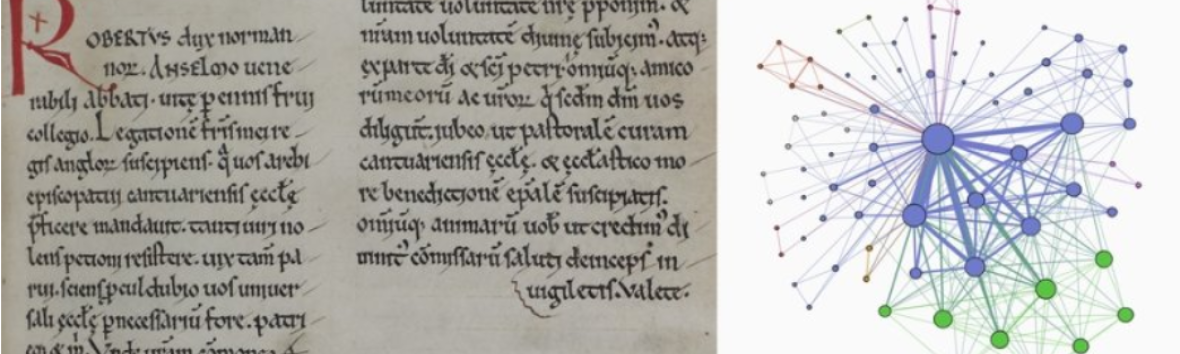
    The expansion of the project’s approach (2017–2019) builds on three findings from the first funding phase (2015–2017): 1. quality and quantity do not represent scientific methods but rather categories of analysis; that 2. “quantifying” and “interpreting” have always been interrelated in the process of analyzing texts; and 3. the dichotomous view of the humanities as qualitative/subjective and the natural sciences as quantitative/objective must be more strongly questioned. Building on this, the underlying epistemological question is formulated: Is the scientific object itself not already both qualitative and quantitative, and is every scientific discipline therefore compelled to rely on both approaches if it is to contribute to the understanding of this object? In addition, to complement quality and quantity, the little-noticed analytical category of “relation” is to be introduced into the methodological discussion.

    Publications resulting from the project:
    • Jana Pacyna: (Re)counting History. Anselm of Canterbury and the English Investiture Conflicts. Perspectives of Historical Network Analysis. (A volume to be published by Brill in connection with the conference “Reading Anselm: Context and Criticism,” Boston College, July 27–30, 2015; expected publication in 2020).
    • Claudia Lauer: The Art of Intrigue. Studies in 12th-Century Courtly Epic. Heidelberg 2020.
    • Claudia Lauer: Literary Narrative. A Theoretical Experiment on Medieval Narrative at the Intersection of Quantity and Quality. In: E. Feistner (ed.): Narration and Calculation as a Paradigm of Historical Narratology? Medieval Studies on the Interaction of Two Unequal Narrative Practices. Oldenburg 2018 (BmE Special Issue 2), pp. 65–89 (online).
    • Claudia Lauer/Jana Pacyna: Counting and Narration. Medieval Literary and Historical Studies in Methodological Dialogue. In: M. Schweikert et al. (eds.): Measuring and Understanding in Scholarship. Interdisciplinary Approaches. Wiesbaden 2017, pp. 23–41.
    • Jana Pacyna/Michael Ott: Visualization as Provocation? Network Analyses in Medieval Studies and Classical Studies. In: Blog of SFB 933 Material Text Cultures: Materiality and Presence of the Written Word (https://sfb933.hypotheses.org/1211).
    • Jana Pacyna/Rodney Ast/Clementina Caputo/Michael Ott: Nodes, edges, and diagrams. In: Blog of the SFB 933 Material Text Cultures: Materiality and Presence of the Written Word (https://sfb933.hypotheses.org/782)

    Conferences, workshops, and seminars organized as part of the project:
    • Interdisciplinary and international conference: Visualization as Provocation? Network Analyses in Medieval Studies and Classical Studies (April 3–4, 2019, Heidelberg Academy of Sciences and Humanities and SFB 933 “Material Text Cultures,” Heidelberg University).
    • Interdisciplinary and International Workshop: Counting and Narrating. Quantitative and Qualitative Methodologies in the Humanities (November 27–28, 2015, Heidelberg).
    • Proseminar: “The Investiture Controversy: A Comparison of England and the Holy Roman Empire” (3 SWS, Winter Semester 2018/19, University of Tübingen) Including 2 sessions: “Digital History, Historical Databases, Historical Network Analysis”
    • Introductory Seminar: “A Comparison of Investiture Conflicts: England and the Holy Roman Empire, 1076–1122” (4 SWS, Summer Semester 2018, University of Heidelberg) Including 2 sessions: “Digital History, Historical Databases, Historical Network Analysis”
    • Source-based seminar: “Anselm of Canterbury Between Monastic Life and Investiture Conflicts in the Anglo-Norman Empire of the 11th Century” (2 SWS, Winter Semester 2017/18, Heidelberg University) Including 3 sessions: “Digital History, Historical Databases, Historical Network Analysis”

    Faculty Members:
    • Dr. Jana Pacyna
    • Assistant Professor Dr. Claudia Lauer (part-time)

    Geoinformatics as a Methodological Bridge in Interdisciplinary Natural Hazard Analysis (NEOHAZ)

    The NEOHAZ project utilizes a combination of methods, values, and concepts from geography, sociology, and computer science. Neogeography can be simply understood as the collection, sharing, and analysis of geographic data by citizens. The affected population is integrated through new participatory methods by capturing local knowledge about natural hazards. This helps increase individual risk awareness and willingness to implement mitigation measures at the local level, while enabling context-appropriate measures to be implemented at the regional level. The methods developed are being applied and evaluated in Santiago, Chile, which is regularly affected by urban flooding. In addition, the methodology is being tested in Eberbach (Neckar), which allows for a geographical comparison and an evaluation of its transferability.

    Further information on the project is available at: www.geog.uni-heidelberg.de/gis/neohaz.html

    Publications resulting from the project:
    • Klonner, C., Usón, T.J., Aeschbach, N., Höfle, B. (under review): Participatory Mapping and Visualization of Local Knowledge: An Example from Eberbach, Germany. International Journal of Disaster Risk Science.
    • Klonner, C., Usón, T.J., Marx, S., Mocnik, F.B., Höfle, B. (2018): Capturing Flood Risk Perception via Sketch Maps. ISPRS International Journal of Geo-Information 7: 359.
    • Höfle, B. (2017): Measuring and Understanding the World through Geoinformatics: The Case of Natural Hazards. In: Schweiker, M., Hass, J., Novokhatko, A., Halbleib, R.: Measuring and Understanding in Science: Interdisciplinary Approaches: 207–223.
    • Klonner, C., Eckle, M., Usón, T., Höfle, B. (2017): Quality Improvement of Remotely Volunteered Geographic Information via Country-Specific Mapping Instructions. In: Proceedings of the ISCRAM 2017 Conference. Albi, France: 939–947.
    • Klonner, C., Marx, S., Usón, T., Porto de Albuquerque, J., Höfle, B. (2016a): Volunteered Geographic Information. In: Natural Hazard Analysis: A Systematic Literature Review of Current Approaches with a Focus on Preparedness and Mitigation. ISPRS International Journal of Geo-Information 5: 103.
    • Klonner, C., Marx, S., Usón, T., Höfle, B. (2016b): Risk Awareness Maps of Urban Flooding via OSM Field Papers—Case Study Santiago de Chile. In: Proceedings of the ISCRAM 2016 Conference. Rio de Janeiro, Brazil: 1–14.
    • Usón, T.J., Klonner, C., Höfle, B. (2016): Using participatory geographic approaches for urban flood risk in Santiago de Chile: Insights from a governance analysis. Environmental Science & Policy 66: 62–72.
    • Höfle, B., Forbriger, M., Klonner, C., Marx, S., Uson, T. (2015): Neogeography of a Digital Earth: Geoinformatics as a Methodological Bridge in Interdisciplinary Natural Hazard Analysis (NEOHAZ). In: Heidelberg Academy of Sciences and Humanities, Annual Report 2014: 259–264.

    Conferences, workshops, and seminars organized as part of the project:
    • Geoinformatics course in the “Governance of Risk and Resources” master’s program at the Heidelberg Center for Latin America (HCLA) in Santiago, Chile
    • Course at the Department of Geography at Heidelberg University: “Disaster Mapping 2.0 in Action: A project-based course on the use of Volunteered Geographic Information in Disaster Risk Management.”

    Faculty:

    Prof. Dr. Bernhard Höfle

    On Translating Knowledge into Understanding

    The project’s basic approach consisted of empirically investigating the perception-shaping effect of metaphors in legal-political discourse. To this end, the phenomenon of “surrogacy”—which has been widely discussed in recent years—was examined. This phenomenon is particularly well-suited because it involves a counterintuitive metaphor: While “loan” generally implies the transfer of use without compensation, “surrogate” motherhood is overwhelmingly carried out for payment—that is, for a fee. The empirical investigation of the effect that the “loan” metaphor has on the perception of surrogacy, for example, is extremely complex. For this reason, the research group was only able to conduct a preliminary study over the course of two years, which resulted in a questionnaire that can now be used to carry out the main study. The research will therefore continue even after the official conclusion of the project. All participants have agreed to attribute these subsequent publications to the WIN project and the HAdW as well.

    Publications resulting from the project:
    • Mohnke M., Thomale C., Roos Y., Christmann U. (2019). Development and Validation of an “Attitude toward Surrogacy Questionnaire” in a German Population. Journal of Reproductive Medicine and Endocrinology 16 (1), 6–14.
    • Thomale, Chris. The Best Interests of the Child Ex Ante—Contemporary Strasbourg Perspectives on Surrogacy. Practice of International Private and Procedural Law (IPRax), Bielefeld (Gieseking Verlag), 2017, pp. 583–590 (peer-reviewed).
    • Thomale, Chris. “State of Play of Cross-Border Surrogacy Arrangements—Is There a Case for Regulatory Intervention by the EU?”, Journal of Private International Law (JPIL), London (Taylor & Francis), 2017, pp. 463–473 (peer-reviewed).
    • Thomale, Chris. Recognition of California Surrogacy Decrees in Switzerland, Praxis des internationalen Privat- und Verfahrensrechts (IPRax), Bielefeld (Gieseking Verlag), 2016, pp. 177–181 (Editor-reviewed).
    • Thomale, Chris. Recognition of Ukrainian Surrogacy-Based Birth Certificates in Italy, Praxis des internationalen Privat- und Verfahrensrechts (IPRax), Bielefeld (Gieseking Verlag), 2016, pp. 493–498 (peer-reviewed).

    Faculty Member:

    Prof. Dr. Chris Thomale
